What you'll know after reading this
- "Sex therapy retreat" covers several very different things, from talk-based clinical intensives to somatic and tantric work, so know which one you're booking.
- The real distinction is what's permitted in the room: licensed sex therapists never use touch, while somatic practitioners work experientially within a strict scope and consent framework.
- A good retreat can catalyse change but never guarantee it, so treat promised outcomes as a red flag.

A retreat is a container, not a cure. Options range from talk-based clinical intensives with licensed therapists to experiential somatic and tantric work, and the key difference is what's permitted in the room. Get clear on your shared "why" as a couple, ask practitioners direct questions about scope, consent and aftercare, and walk away from anyone guaranteeing results.
By Julian Marcus, Clinical Somatic Sexologist & Certified Sexological Bodyworker
Most couples who reach out to me about a retreat have already tried a great deal. They have often spent years, sometimes decades, in talk therapy, couples counselling, group work, occasionally plant medicine.
Usually the ones who find me aren’t looking for a beginning; they’re looking for meaningful shift, lasting clarity, and change that the formats they’ve already tried haven’t quite delivered. Every provider’s approach is unique, and better suited to some couples’ needs than others, so it’s worth understanding the main differences and opportunities available.
What a retreat can and can’t do
I want to name this at the outset, because it tells you what a retreat actually is.
A good retreat is not a repair shop, and it is not a rescue. It is a container: at best, a consciously crafted, concentrated stretch of time held with care, that can interrupt a pattern the two of you have perhaps been circling for years.
In my own experience, it can catalyse real change for coupled clients. What makes that most likely is good onboarding and matching between facilitator and couple, plus alignment between each partner’s individual expectations and the couple’s shared reasons for choosing a retreat.
A facilitator’s role is to create the best possible conditions for the relational change you both seek, without adapting, going along with, or bypassing what’s true, and instead holding radical acceptance, compassion, and honest expression.
What a retreat cannot do is guarantee that change happens, because it is a dance, and it can only be integrated and carried forward by you both. It can catalyse change. It cannot guarantee it, and you should be wary of anyone who claims otherwise.
This guide is for couples trying to work out whether a retreat is right for them, and if so, which kind. I’ll be honest about what I do and don’t offer, because the phrase “sex therapy retreat” covers several quite different things, and telling them apart is the single most useful thing you can do before you book.
What “sex therapy retreat” actually means
Type that phrase into a search bar and you’ll get results that may look similar but aren’t. Broadly, they fall into a few families:
Clinical sex therapy intensives. These are led by licensed clinicians, often AASECT-certified sex therapists, and they are talk-based. A couple usually works privately with a therapist over one to three days to understand the emotional and sexual patterns keeping them stuck. Contrary to a common assumption, the private, one-couple intensive is the dominant model here, not the rare one; many clinicians offer a weekend with a single couple as their flagship format. For couples working through specific clinical issues (a history of trauma, a diagnosable sexual dysfunction, complex mental health considerations alongside their intimacy concerns), this is often the right and, frankly, the most appropriate door to walk through. Clinical sex therapy has decades of research and professional infrastructure behind it, and I want to be clear that nothing in this guide is meant to suggest otherwise.
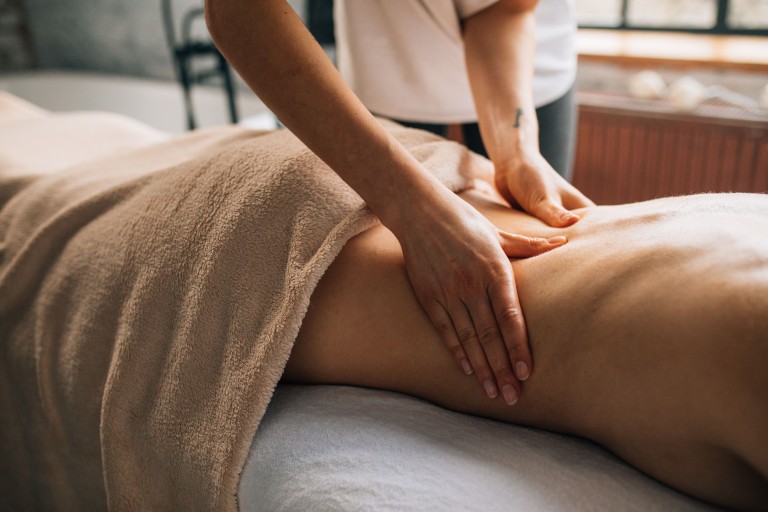
Somatic and sexological bodywork retreats. This is my world. The focus is experiential and body-based rather than purely conversational, working with the nervous system, breath, movement, and, within a clearly bounded scope, consented touch practices.
Tantra and sacred-sexuality retreats. Rooted in spiritual and energetic traditions, these vary enormously in rigour and framing.
Structured couples intensives. Built around attachment and communication models (Gottman, EFT, Imago), these deepen relational connection and may or may not centre sexuality specifically.
There’s also the question of format: private (one couple, fully tailored) versus group (community, shared witnessing, usually lower cost). Both formats exist across all of the families above.
The meaningful distinction isn’t private versus group: it’s what’s permitted inside the room
In some jurisdictions this is not only an ethical breach but a crime. That’s exactly why clinical intensives describe themselves plainly as talk-based, with no touch and no nudity. It isn’t a limitation of skill; it’s a boundary of the discipline, and a protective one that exists for good reason.
Somatic sexology occupies different ground, with its own code of ethics and scope of practice. My work, and the trainings I offer other practitioners, focuses on embodied coaching and education rather than clinical therapy; it can include body-based, experiential practice: always contained, always client-centred, nervous-system aware, trauma-informed, and always within the professional scope of practice.
Somatic sexology, as taught and practised in my community, helps a couple identify a learning edge and a learning goal, individually and then shared, and that forms the focus of the explorations within the retreat. The professional bodies themselves treat sexuality education and sex therapy as separate disciplines, not two grades of the same thing. Both have real value; knowing which one you’re looking for simply saves you time, money, and disappointment.
What to expect
Formats vary, so treat what follows as orientation rather than a fixed template.
In my own practice, I usually hold a minimum of three days for couples, because meaningful change needs time and grounding. My most recent longer private couple container was nine days, with a rest day in the middle. That pause is deliberate, giving the nervous system time to metabolise rather than simply accumulate.
Whatever the length, I build in substantial time for integration and installation, often at least a full day. This is the part that cheaper or faster formats tend to skip, and to me it’s the part that determines whether anything you touch during the retreat actually comes home with you.
A peak experience that never gets integrated is just a nice memory, like a trip to a beautiful island that stays a lovely, separate memory rather than becoming part of how you actually live.
What experiential work responsibly means, in my practice, is what I’d call a somatic opening: body-based inquiries that let a couple notice how they organise themselves in relationship to their body, their desire, their pleasure, their sexuality, and their sense of belonging.
Bodywork and somatic coaching can create genuine, felt, state-changing shifts: the kind of lived experience that, in my clients’ own words and in my personal experience, talk alone doesn’t always reach on its own. It offers witness, emergent empathy, and an immersive sense of what’s possible, which can gently challenge beliefs a couple has quietly assumed were fixed.
None of this means talk therapy is any less effective or necessary, and I’m not claiming my approach is better, only sharing what my clients tell me about their lived experience. I always encourage individuals and couples to do their own research and choose what feels most useful and aligned for them.
What a reputable retreat will not do
This matters as much as what it does do. Wherever it sits on the talk-to-experiential spectrum, a trustworthy retreat has a clear scope of practice and clear limits.
No practitioner will engage in sexual activity with you. Any touch, if touch is part of the work at all, is bounded, in service of a clear learning goal, explicitly and enthusiastically consented to, and never a surprise, never framed as expected, pressured, or “what you need.”
If a practitioner is vague about scope, blurs the line between facilitator and participant, or treats consent as a form you sign once and forget, walk away.
The consent container
If there’s one thing I want couples to understand, it’s that feeling safe enough to explore is not a nice-to-have. It is the precondition for any change at all. The container comes first; the work happens inside it.
I lean on Betty Martin’s Wheel of Consent as a working map: a way of distinguishing who is doing and who is receiving, who an action is for, and how easily we confuse serving someone with pleasing them, or receiving from a partner with adapting and tolerating anyway. Most couples have never had language for this, and simply gaining it can be the intervention.
Embodied consent is not a waiver. It’s a practice: a muscle you build by choosing, again and again, and noticing what your body actually says.
Body-based practice gives you somewhere to exercise that muscle: to flex your capacity for limit-making and choosing, and so become more conscious of your own boundaries. That’s not a detour from the intimacy and sexuality work for couples. It is the work.
This is also where my responsibility as a practitioner is non-negotiable. When I lead a couples retreat, I run an intake that honours both people and each of their reasons for coming, and I assess the embodied consent of every potential participant. Full stop.
I’ll give you a recent example, kept deliberately anonymous. My last residential private retreat was with a couple who had been married for decades. As is common, one partner was more directly engaged with the erotic embodiment material; the other told me plainly that their reason for booking was to support their partner through their partner’s sexual history. Both reasons are legitimate starting points. My job, at intake, is to make sure the two of you are arriving on truly compatible ground, and, in my case, that you are enthusiastically choosing a model where education, not therapy, is the focus. That enthusiasm has to be real, from both of you, or we don’t proceed.
How to choose
If you’re starting from scratch, here is roughly the order I’d suggest.
First, read into the field. Learn the difference between the kinds of practitioners above, so you can tell which door you’re knocking on. Titles like “sex coach” are unregulated; the presence of a title tells you less than the presence of training, ethics, and references. Always check references and testimonials, and get informed about the different types of practitioners and retreat containers available to you.
Then, inquire inwardly, individually and as a couple. Before you compare practitioners, get honest about your own situation. What is your mental health history? Are either of you on medication? What approaches have you already tried, and what did they give you, or fall short of giving you? And most importantly: what are you actually hoping to learn, discover, let go of, transform, or achieve, together? A retreat aimed at repairing after an affair is not the same as one aimed at deepening desire, which is not the same as one aimed at a long-standing desire discrepancy. Naming your “why” is what lets you match it to the right work.
Then, have conversations. Once you’re both clear, book introductory or chemistry calls with several practitioners. A good one will welcome this. You’re feeling for fit, for scope, and for whether this person can hold both of you, not just the more eager partner.
Questions worth asking on those calls:
- What exactly happens during the retreat, hour to hour?
- What is, and isn’t, within your scope?
- Does the practitioner carry insurance for any adverse effects that may arise?
- How do you handle consent, and what happens if one of us wants to stop?
- What’s your training, and who holds you accountable? What does integration and aftercare look like?
Red flags to take seriously: guaranteed outcomes; pressure or false urgency; vagueness about scope; guru dynamics or love-bombing; the absence of any consent framework or external accountability; and no plan for aftercare.
Explore retreats on Sensuali
Led by trusted practitioners All retreatsDevotional Tantra Session
Washington, US
Sexy Shopping
Paris, FR
Tantric Embodiment Journey (Online)
Group in-person Yoni Steam Ceremony for Women
Austin, US
De-Armouring Ritual for Women
Austin, US
Full-Day Private EroSoma Immersion Workshop
Portland, US
Somatic & Sexological Intimacy Coaching.
Sensual Arts Facilitator and Sex Educator
Somatic Sex and Relationship coaching for couples and individuals.
Chicago, US
Sensuality Mentor - specialising in touch and intimacy for individuals and couples
Somatic Intimacy Session
Toronto, CA
Video coaching
Hayward, US
When a retreat isn’t the right call
Honesty here protects you. A retreat is not the right container for an acute mental health crisis, for active abuse, or for a situation where one partner is effectively being brought along against their enthusiastic, fully committed will. Immersive, activating work needs a stable enough foundation to land on. If that foundation isn’t there yet, the appropriate first step is licensed clinical or crisis support, and a responsible practitioner will tell you so rather than take your booking. This is also, often, exactly where a licensed clinical sex therapist is the right person to see first.
Practical considerations
Retreats are a real investment of money, time, and privacy. Private intensives in particular span a wide price range depending on duration and the seniority, experience, and qualifications of the practitioner, and on whether travel and lodging are included. Factor in time away, travel, and the discretion you’ll want around something this personal.
And plan for re-entry. The days after a retreat can sometimes carry a genuine dip. You’ve been in a heightened, held space, and ordinary life can feel flat or destabilising by contrast.
This is quite normal for some individuals and couples, and a good retreat anticipates it, which is why I weight integration so heavily and build in follow-up.
The measure of a retreat isn’t how it feels on the last morning. It’s what still feels true a month later, what’s actually being lived and woven into how you relate, behave, and agree with each other going forward.
Is the work still feeding you, still alive, or did it pass and get lost? Good preparation and planned integration, within and after the retreat, sets you both up to get the most from it.
A closing thought
I consider it a deep honour, and an ongoing and exciting challenge, to support the particular configuration of desires, needs, and meaning-making that every couple brings. There is no template, because there is no template couple. Each situation is taken on its own terms.
I’m also proud to be part of the community here at Sensuali, and of the culture of accountability among colleagues worldwide who offer each other interdisciplinary peer supervision. The standards and care I encounter in my community of practitioners inspire me, and there are many excellent people here supporting wonderful outcomes for their couple clients.
Join Sensuali
Your invitation to Sensuali.
Discover trusted couples retreats, workshops & other experineces and book for free on Sensuali.
Worth knowing: Sensuali currently features relatively few licensed clinical sex therapists on the platform. If a private, talk-based clinical intensive with an AASECT-certified therapist is specifically what you’re looking for, that’s a worthwhile thing to search for directly, alongside what you find here.
Where Sensuali excels is in its range of intimacy guides, somatic sexologists, tantra and sacred-sexuality teachers, and other experiential practitioners, and couples retreats found through the platform tend to sit in that territory. That’s not a lesser path; for many couples it’s exactly the right one. It just helps to know, going in, which family of practitioner you’re meeting.
That’s also why I hold the wider community of practitioners in real regard. The people supporting couples with sex and intimacy come in many forms, and the right guide for you may very well not be me.
If you’re curious about exploring a retreat, whether private or group, somatic, tantric, or otherwise, Sensuali is a good place to meet vetted practitioners and find the fit that’s truly yours.
You can also read about the experiences our practitioners have had learning from one another on the platform. Take your time. Ask your questions. Choose well. Reach out to us if you have questions, or find my contact details on my practitioner profile below.
Book a session with Julian Marcus
Embodied confidence. Deeper connection. Fully alive sexuality.
Explore more couples experiences on Sensuali.
Sources & further reading.
- American Association of Sexuality Educators, Counselors and Therapists (AASECT). Position on touch and the AASECT certified professional
- AASECT (2020). Code of conduct for AASECT certified members
- AASECT. AASECT requirements for sex therapist certification
- Association of Certified Sexological Bodyworkers (ACSB) (2022). Code of ethics
- Betty Martin with Robyn Dalzen (2021). The art of receiving and giving: the wheel of consent
- The Gottman Institute. The Gottman method