If you have found your way to this article, chances are you are curious about Tantra. Perhaps you have heard whispers about it promising mind-blowing intimacy, or maybe you have seen it sensationalized in movies and media. But if you also harbor a healthy dose of skepticism, you are exactly where you need to be.
Hello, I am Julian Marcus. I am a somatic sexologist, a somatic sex educator, and the founder of the School of Relational Bodywork. In my daily practice, I mentor Tantra practitioners and coach the public on co-creating clarity and consent when it comes to relationships and tantric practices. I also mentor and teach Intimacy Coordinators (ICs) for film and television, guiding them on how to accurately and ethically choreograph authentic Tantra on screen without falling into the traps of cultural appropriation or misrepresentation.
Through my years of teaching, I’ve realized that the general public faces the same confusion as film directors: there are simply too many myths obscuring what Tantra actually is. As you explore the diverse practitioners and events here on the Sensuali platform, my goal is to demystify Tantra for you. I want to equip you with a clear understanding so you can confidently make empowered choices about what you want to learn, experience, and get out of your own journey of embodiment.
The essence of Tantra: trusting the “yes”
To understand Tantra, we must first look at its roots. Tantra is an esoteric yogic tradition and spiritual science that developed on the Indian subcontinent from the middle of the 1st millennium CE onwards, intertwining with both Hinduism and Buddhism. In Sanskrit, the word Tantra translates to “expansion-device,” “salvation-spreader,” or “loom, weave, warp”. At its core, it is a path of weaving together the varied threads of human experience.
Unlike many modern philosophies that view spirituality as something separate from our daily lives (a transcendent force “up there”), Tantra embraces the incarnated body and the manifest universe as deeply profound and sacred.
It is said that you can sum up the essence of Tantra in one simple word: “Yes”.
At its most basic, Tantra asks us to trust in the goodness of all life. It is the practice of saying “yes” to life exactly as it is, without rejecting the parts we find uncomfortable or even terrifying. This means staying awake and present to our vital life force, becoming a moment-by-moment practice of being awake to our Shakti.
In Tantra, Shakti is the primordial life force or divine feminine energy that animates all existence. It is the dynamic power of creation, transformation, sensuality, and consciousness itself — the living energy that moves through the body, nature, and the universe. And importantly — especially when it comes to embodied consent — even an outward “No” is actually a beautiful inward “Yes” to yourself and your own boundaries.
Before you can decide how you want to engage with Tantra, we must clear away the media-driven misconceptions that often reduce this ancient tradition to a trendy lifestyle choice.
Common misconceptions about Tantra
Tantra is only about sex. One of the most prevalent misconceptions is that Tantra is solely about sexual practices. While sexual energy is acknowledged and sometimes integrated, classical Tantra encompasses a much broader range of practices, including meditation, breathwork (pranayama), visualization, and deep energy work. Portraying Tantra as purely sexual fundamentally misrepresents its rich history.
Tantra is purely hedonistic. Many assume Tantra is an excuse for wild indulgence. In reality, classical Tantra is deeply rooted in discipline, self-awareness, and expanding consciousness beyond the ego. It requires immense dedication and balance. Pleasure is not the ultimate goal; rather, it is a byproduct of being fully present and connected to oneself and the universe.
Tantra encourages wild, ritualistic sexual ceremonies. Media loves to sensationalize Tantra with images of secretive orgies. This is a gross exaggeration. Traditional rituals are highly structured, deeply symbolic, and far more focused on inner meditation and energy circulation than on physical acts.
Tantra is a “quick fix” for relationship problems. Sometimes marketed as a rapid solution for improving sexual performance, this approach is known as “tantric bypassing”. Tantra is not a self-help hack for instant gratification; it is a path that requires time, patience, and dedication to promote long-term emotional healing and growth.
Neo-Tantra is the same as Classical Tantra. This is a vital distinction for anyone booking a workshop or practitioner. Neo-Tantra simplifies and adapts classical teachings for modern audiences, focusing heavily on relationships, personal development, and conscious sexuality. Classical Tantra is a highly sophisticated system focused on profound spiritual liberation (Moksha). Both have incredible value, but conflating the two in the media often leads to cultural appropriation.
Navigating the landscape: finding the balance
As you browse Sensuali for practitioners, you will likely encounter offerings rooted in both Classical and modern Neo-Tantra.
For me, embodiment, self-actualization, and the development of our human potential is a true branch of spirituality that is not dependent on dogma or rigid tradition. This inclusive approach allows it to serve and unite us, free from partisan division. At the same time, I feel it is deeply important that we don’t lose sight of the ancient traditions and appropriate these practices without the respect and consideration for where they came from. There is a vital balance to be had here.
When you choose a practitioner, you can look at their focus: Classical Tantra often seeks an expansion of consciousness to transcend the material world. Neo-Tantra places a greater emphasis on using our present human intimacy and conscious sexuality as a gateway to personal growth, emotional healing, and transformation.
Classical Tantra vs Neo-Tantra
Although they share common roots, Classical Tantra and Neo-Tantra often differ greatly in intention, structure, and practice.
A classical tantra session is typically rooted in ancient spiritual traditions from India and Tibet. The focus is less on pleasure or sexuality, and more on consciousness, liberation, ritual, meditation, breathwork, mantra, energy cultivation, and devotional practice.
A session may include meditation, movement, visualisation, chakra work, breath practices, or sacred ritual designed to awaken awareness and integrate body and spirit.
Sexual energy may be acknowledged as part of life force energy, but it is not always central to the practice.
People who are drawn to classical tantra are often seeking:
- Spiritual depth and inner transformation
- A meditative or devotional path
- Greater self-awareness and embodiment
- Integration of sexuality within a wider spiritual framework
- Traditional teachings and philosophy
Neo-Tantra, by contrast, is a modern Western evolution of tantric principles that places greater emphasis on intimacy, emotional connection, sensuality, healing, and conscious sexuality.
A neo-tantra session may include breathwork, eye-gazing, conscious touch, emotional release practices, communication exercises, massage, or exploration of intimacy and pleasure in a safe, therapeutic setting.
People who book neo-tantra sessions are often looking for:
- Healing around intimacy or sexuality
- Greater pleasure and body awareness
- Support with shame, disconnection, ED or PE
- Improved relationships and communication
- Emotional openness, sensual exploration, and embodied connection
While classical tantra tends to prioritise spiritual transcendence and disciplined practice, neo-tantra often focuses on emotional healing, relational intimacy, and embodied experience. Both share the tantric understanding that the body is not separate from consciousness — but they express that understanding in different ways.
Non-dualism and Tantra
Tantra is considered a non-dual spiritual tradition because it does not divide reality into opposing categories such as sacred and profane, spirit and body, or sexuality and spirituality. Instead, Tantra views all aspects of life as expressions of the same underlying consciousness. In this view, the divine is not separate from the physical world — it is embodied within it.
Unlike traditions that seek transcendence by rejecting the body or worldly experience, Tantra teaches that awakening can arise through embodiment, relationship, sensation, emotion, and presence. Pleasure, desire, grief, intimacy, and even difficulty can all become pathways to deeper awareness when approached consciously.
This matters because Tantra offers a radically inclusive approach to spirituality. Rather than escaping human experience, it invites a fuller participation in it — encouraging integration instead of separation. For many people, this non-dual perspective creates a more compassionate relationship with the body, sexuality, and the emotional self, allowing spirituality to become something lived and embodied rather than abstract or detached.
The colours of Tantra
To help distinguish the many approaches within modern Tantra, practitioners often describe different paths using the symbolic “colors” of Tantra. These categories are not traditional schools in themselves, but modern ways of understanding different emphases within tantric practice.
White Tantra focuses on meditation, breathwork, mantra, devotion, and spiritual awakening. Sexual energy may be cultivated, but it is typically redirected or refined toward higher states of consciousness, inner union, and connection with the divine rather than outward sexual expression.
Pink Tantra emphasises emotional intimacy, heart connection, sensual presence, and conscious relating. Practices often include eye-gazing, communication, affectionate touch, and embodied connection, usually without explicit sexual activity. This term is more commonly used within modern neo-tantric spaces than in traditional Tantra.
Red Tantra embraces sexuality and erotic energy as a direct pathway to transformation, healing, pleasure, and expanded consciousness. It works with the body, desire, polarity, and physical intimacy as sacred expressions of life force energy.
Rather than being rigid categories, these “colors” often overlap in practice, and many modern facilitators draw from elements of all three.
Your fundamental tools: breath, movement, sound, and touch
Regardless of which path you choose, the fundamental tools of all embodied intimacy are incredibly accessible: breath, movement, sound, and touch.
In my work, I teach Wheel of Consent practices for opening up the direct route to pleasure (you can search for free videos on this on YouTube as a key fundamental pathway to embodiment and presence). This helps us to feel more through our hands and body and move from technique and doing or trying to please into connection, slowing down and feeling more, which gives rise to noticing more what is under your fingers. As we deepen our capacity to open to this direct route with touch we can move into practices like sacred touch, mentioned below, as we are opening more to presence and receiving more deeply what this moment, this sensation and this person means to us.
Once we are able to open to life and say “yes” to our own life force, sensation, and creativity, we can tap into the simple, satisfying experience of our being.
If we combine that pleasure and sensation with conscious breath, we can learn to move that feeling through our whole body. Add in movement and sound, and we can take this even further. The physiological shifts that these powerful yet often simple practices create are amplified when combined, and can give way to what has historically perhaps been thought of as a mystical experience.
A deep dive into tantric practices: what you can try at home
If you are curious about incorporating Tantra into your own relationship, you don’t need a lavish setup to begin. Beyond utilising the fundamental tools of breath, movement, sound, and touch, there are specific, beautiful practices you can try at home to profoundly enhance your solo self pleasure or coupled intimacy.
Sacred touch (Nyasa). This involves mindful, intentional touching aimed at awakening the senses and energy centres (chakras) within your own or each other’s bodies. Instead of touch aimed at arousal or reaching a climax, Nyasa might involve gentle caresses or massages focusing entirely on reverence and awareness of your partner’s physical form.
If you are starting solo, feel where in your body would love some touch right now, what quality of touch would you love to experience, and let the hands follow that inner instruction. This creates a kind of bio-feedback between the desire arising in the body and the action and following of the touch.
We all know that our hands are touching our bodies or our partners, what we tend to forget is that our body is touching our hands.
We can tune into both points of contact and have a different experience based on that shift of awareness. Try it.
The Yab-Yum position. Also known as the Tantric Union Pose, this is a beautiful way to merge energetically with a partner. In this pose, one partner sits cross-legged while the other sits on their lap, facing them, so their bodies are closely aligned.
Symbolising the union of dynamic and receptive energies, this practice is often combined with synchronised breathing, deep eye-gazing, and a focus on heart connection. It is an incredibly powerful way to cultivate presence and mutual respect, deeply enhancing both physical and emotional closeness.
Karezza (the art of slow sex). Originating in the late 19th and early 20th centuries, Karezza is a form of non peak orgasmic sex that emphasises emotional bonding over physical release. In this practice, partners engage in incredibly slow, warm, mindful lovemaking without making genital orgasm the goal.
Instead, the aim is to build a deep, loving energy exchange through physical closeness and affectionate touch. It takes the pressure off “performing” and replaces it with a pure, harmonious exploration of each other. These practices promote oxytocin production and can help solidify and deepen the bond between couples.
With some awareness building and practice it is possible to experience other non genital peak orgasms that are often more generative cultivation of arousal, life force or pleasure. This can be shared between the two of you, circulated through kissing, breathing and movement and experienced frequently as leading to more energy, less tiredness or post orgasmic hangover.
I like to describe this kind of practice as grounded in bliss we can journey into ecstasy. When we expand our focus on lower levels of arousal a new world of expanded sensation becomes increasingly available to us that is calm, grounded and dependable. This in turn can loosen our dependence on release and lead to more vitality and co-regulation as a couple, leading to better emotional regulation and trust.
Exploring Tantra with professionals on Sensuali
Trying these practices at home is a wonderful start, but many times when we are starting out with a new practice, transformative experiences happen when we allow an experienced professional to guide us. If you want someone to lead, support, or essentially “hold your hand” while you explore this topic, Sensuali’s platform is filled with options to help you discover if this path holds something profound, enjoyable, or exciting for you.
- Tantra therapy: If you are dealing with relational blockages, past conditioning, or simply want to explore your intimate landscape in a deeply safe container, Tantra therapy often offers somatic (body-based) healing to help clear stagnant old patterns and foster and ground new personal liberation.
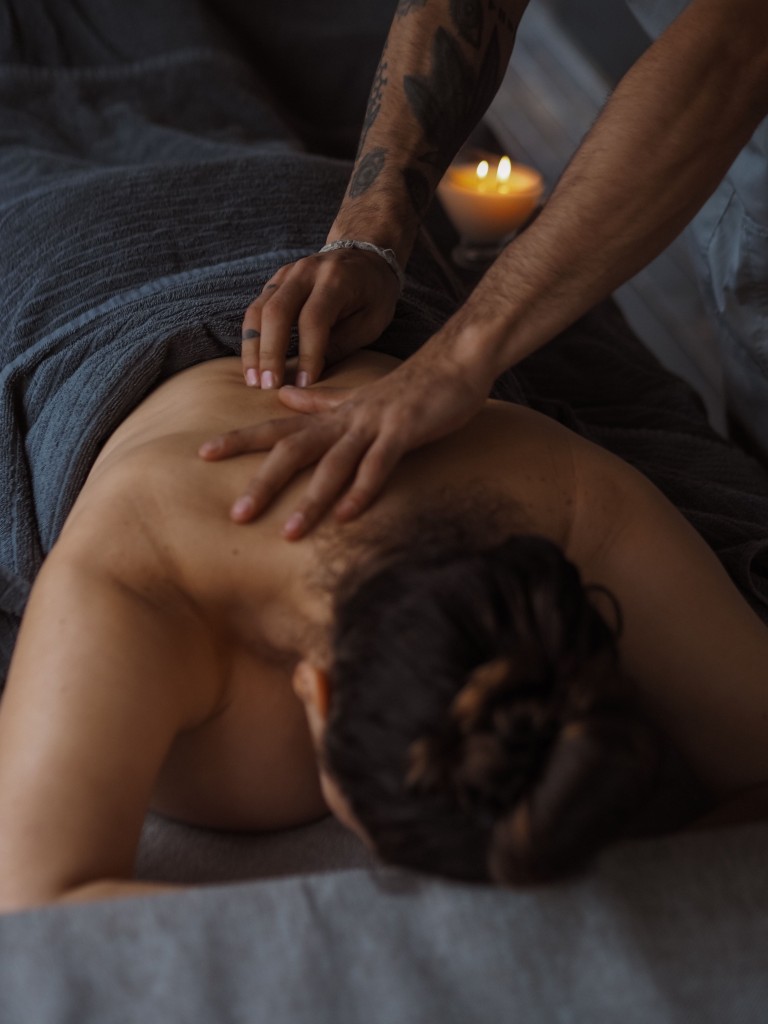
- Tantric massage: Sometimes we need to get out of our busy minds and back into our bodies. A tantric massage, when done well, is a deeply respectful, energetic bodywork session designed to awaken your senses, move your life force energy, and teach you how to receive pleasure without the pressure of having to give anything back.
- Tantric couples rituals: For partners looking to deepen their connection, booking a guided couples ritual can be transformative. A practitioner can facilitate a safe feeling space, guiding you both through breathwork, eye-gazing, and energy circulation, allowing you to focus entirely on each other while the facilitator holds the energetic container.
- Tantric retreats: If you are ready for a fully immersive experience, retreats offer a supportive private or community environment to dive deep into both Classical and Neo-Tantric teachings, separating you from the distractions of daily life so you can focus entirely on your physical and relational growth.
Explore tantra experiences on Sensuali.
Power dynamics and embodied consent: your safety first
As a mentor for the public, practitioners and film industry professionals, my highest priority is safety, clarity, and consent. It is important to recognise that intrinsic power dynamics are always at play particularly whenever we enter into a practitioner and client relationship.
When a teacher, therapist, or massage practitioner is considered or assumes a position of superior knowledge — or even when one romantic partner is perceived by the other to bring more prior experience to the table — imbalances easily arise.
We all know that historically, within training schools, ashrams, and temple spaces, this has unfortunately led to many systemic abuses of power. Therefore, understanding and navigating these dynamics is crucial when you step into a practitioner’s space or engage with a partner.
My advice is to make sure that your practitioner honours your choice, limits and preferences. As you book a session or experience, this time is for you and in service of your learning, enjoyment and expansion.
True tantric exploration is a moment-by-moment practice of staying awake and saying “yes” to life, exactly as it is.
To do this safely, you must develop your internal self-awareness — the capacity to know when your nervous system is feeling a “full embodied YES”. This means recognising when you are truly and clearly wanting, versus when you are simply in endurance, enduring an experience just to please a partner or practitioner.
Remember, even an outward “No” is actually a beautiful inward “Yes” to yourself and your own boundaries. You must never override your authentic “No” or suppress your true feelings as this will be costly to you and the practitioner in the long run.
If you are exploring these practices with a partner at home, always begin by setting clear intentions to align yourselves. Afterward, engage in aftercare — a vital period of reconnection that allows you both to process and integrate the intense emotional or energetic shifts of the experience together.
This way what you experience in this sacred moment together can move from short into medium and long term memory which enables you to evolve, shift and grow as a couple based on authentic reflection and sharing. This is how we evolve by interrupting, with compassion, our old patterns and learnt behaviours in favour of consciously crafting new ones.
What makes an experience truly tantric?
Many people think of Tantra as being very binary but if you look more closely, you might start to appreciate that it is more about polarity and a spectrum of experience, elements and being than it is duality.
As you browse the offerings on Sensuali, you might wonder: with so many different practices available, what actually makes an experience Tantric? To answer this, I look to my friend and teacher Peter Littlejohn Cook, who outlined four core characteristics that beautifully define for him a true Tantric practice. These resonate with me deeply and I hope will support you in your exploration also:
- The primary purpose is liberation: The goal is freedom from past conditioning (Karma) and acting with deep, unclouded awareness in the present moment. We don’t have to think of this in necessarily spiritual or religious terms but can be seen as freedom from unnecessary suffering or emotional entanglement.
- Deeply honouring the divine feminine (Shakti): Tantra celebrates the full, dynamic range of energy, bringing the feminine principle back into balance and honouring both the active motion of life (Shakti) with pure, still awareness (Shiva). I see this as addressing the power imbalance commonly understood as patriarchy and its effect on men, women, and society as a whole. For millennia, the overdominance of the masculine principle in society has been recognised as damaging to what we might term a feminine pole of consciousness and being. Peter raises this point to redress the balance and emphasise the wisdom of compassion, caring, and what is commonly associated with the feminine. What I understand he is saying is that it may benefit us all, when selecting a practice or activity, to pay particular attention to honouring the feminine aspect within us all.
- Non-conformist and anti-dogmatic: Tantra invites critical inquiry. It encourages you to utilise what actually works for you, celebrating individual expression rather than blindly following rigid societal norms or your own internalised status quo.
- Compassionate and anchored in service: A true tantric approach fosters empathy, mutual empowerment, and a nurturing environment where partners feel entirely safe to explore their deepest intimacy and heal their emotional wounds.
Tantra is not a monolithic, dogmatic religion; it is an incredibly diverse, adaptable, and deeply respectful science of human potential. It is an invitation to learn more embodied ways to say “Yes” to your life.
As you look through this platform, I encourage you to ask yourself: what do I want to experience? Are you looking for quiet internal focus, heart-opening emotional connection, or passionate, conscious sexuality?
You hold the power to choose. Step forward with curiosity, keep your boundaries close, and know that the journey to deeper embodiment and presence is entirely yours to co-create.
Find experiences such as tantra massage, tantric therapy, workshops and more on Sensuali. Explore tantra.
Read more: My first tantra workshop changed everything I thought I knew.