What you'll know after reading this
- Prostate massage offers unhurried touch. This works because your body only relaxes when it feels safe.
- In prostate massage, you experience something rare: receiving care without giving anything back.
- Find a practitioner with real training who welcomes your questions and doesn't judge.
Who’s behind this article? A space for exploring intimacy, sensuality and kink. Message trusted practitioners, book real experiences, discover sensual events and get answers in our forums.You’re reading Sensuali
Modern life asks men to constantly project outward – doing, achieving, and performing to endless lists. Over time, this pace can leave a man living almost entirely in his head, unfamiliar with what’s actually happening in his own body. The disconnection rarely announces itself directly. It shows up as a bit of tension in the jaw or shoulders that’s been there so long it feels normal. Or a tightness in the chest that becomes a headache or a throbbing in the low back that comes from nowhere. Most men learn to work around these signals rather than listen to them.
Nowhere is this disconnection more pronounced than in the pelvis.
Shoulders get rubbed after a long day; backs get stretched and cracked. But the pelvic floor – the muscular floor of the body that governs posture, continence, and sexual response – is almost never touched with intention past childhood.
It’s a part of the body most men have never consciously felt from the inside, and one that quietly holds a lifetime of stress, bracing, and unspoken emotion.
You can’t think your way into deeper embodiment. Understanding a concept and feeling it in your body are two different things. Sometimes the only way through is to work with the body directly, patiently, and with full consent, rather than analyzing your way around it.
What somatic prostate massage actually is
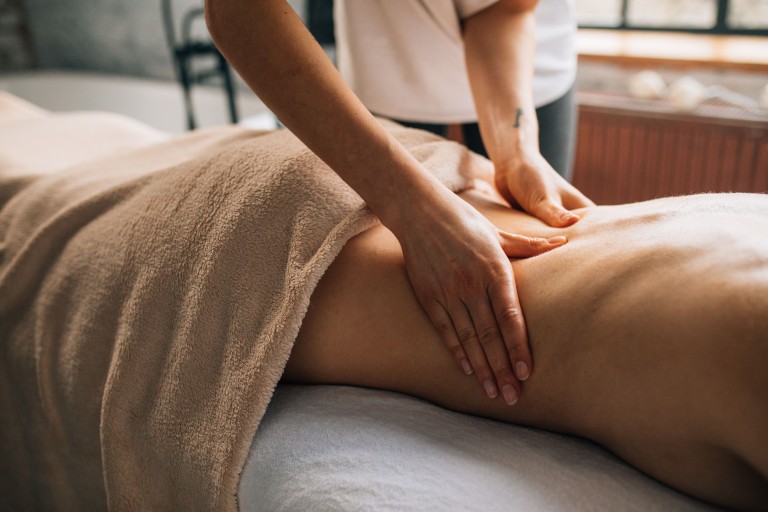
Somatic prostate bodywork is an invitation to slow down and experience the body from the inside out. It offers men the chance to reconnect with a part of themselves long treated as taboo, off-limits, or purely clinical – and to discover instead the grounded, three-dimensional sense of self available once this area is met with presence rather than avoidance.
If your only reference points for prostate work are a rushed clinical exam or a hook-up app, it’s worth knowing there’s a third category.
A professional prostate massage teaches the distinction between three kinds of touch: medical (clinical, efficient, purpose-driven), sexual (romantic or casual, oriented around arousal or release), and somatic (slow, mindful, educational).
A well-trained practitioner offering somatic touch creates a genuinely safe container – built for self-discovery and nervous system regulation, not performance.
By the end of this article, you’ll understand what a somatic prostate massage is, why the body responds the way it does, and what to look for in a legitimate practitioner.
Explore prostate massage, in safe hands
Author of this article, Dr. Liz Ray is a certified sexological bodyworker. Explore prostate massage sessions with her - always safe and consent-led.
How your body is wired for this
To understand why this work can be so powerful, it helps to know what’s actually going on beneath the surface.
The pelvic floor. The pelvic floor is a hammock-like group of muscles stretching from the pubic bone to the tailbone. It’s easy to overlook – it’s never flexed at the gym or stretched in yoga class – but it works constantly, supporting the organs above it and controlling both urination and sexual function. Because it’s almost never consciously released, many men carry years of unexamined tension here without realizing it. Chronic sitting, stress, and the habit of “holding it together” all accumulate in this part of the body.
The prostate. The prostate sits at the base of the penis, the deepest internal point of the organ. Its job, simply put, is to act like a one-way switch – allowing urination or ejaculation, never both at once. Because it shares nerve pathways with the rest of the penis, touch here can create sensations that seem to travel – some men find pressure at the prostate can be felt at the tip of the penis. This “mapped” sensation is often the first time a man experiences his anatomy as a connected whole rather than separate parts.
The two sphincters. The anus is guarded by two rings of muscle. The external sphincter is voluntary – you can tighten or release it at will, like a fist. The internal sphincter is governed entirely by the autonomic nervous system – the part of you that runs on its own without conscious input, and also controls things like heart rate and digestion. It can be forced open, which is what happens briefly and uncomfortably during a medical exam, but it cannot be consciously willed open the way the external sphincter can.
Why slowness matters. Because the internal sphincter is autonomic, it opens on its own timeline, and only under conditions of genuine safety. This is the premise of somatic prostate work: rather than forcing access, the practitioner creates the conditions – trust, patience, unhurried time – that allow the internal sphincter to release on its own. That release tends to trigger a broader shift in the nervous system: a drop out of “fight or flight” into a deeply relaxed, parasympathetic state, often felt as a wave of relaxation moving through the whole body. This mechanism – safety enabling release, release cueing whole-body down-regulation – explains why this slow work can produce emotional releases that feel disproportionate to the touch involved. The body isn’t just relaxing a muscle; it’s finally getting the “all clear” to let go of tension it may have held, unnoticed, for years.
Prostate massage might be for you if
This work tends to resonate with men who:
- Notice chronic tension or numbness in the pelvic area and want to understand it better
- Feel disconnected from their body and are curious about what’s actually there
- Are dealing with erectile dysfunction, low sexual sensitivity, or reduced pleasure
- Experience chronic pelvic pain or prostatitis-related symptoms
- Want to deepen communication and intimacy with a partner
- Are interested in what embodiment and nervous system regulation actually feel like
- Are willing to slow down and experience something unfamiliar without a specific outcome in mind
Having said that, there’s no right way to explore prostate massage. The benefits are varied and individual.
Benefits of a somatic prostate massage
Physical
The physical benefits are wide-ranging but tend to fall into a few categories.
Increased blood flow to the pelvic area can help clear stagnation and may support men dealing with erectile dysfunction.
Many also report a noticeable increase in orgasmic sensitivity over time, likely connected to the new “mapping” of internal and external sensation described above.
There’s also growing recognition that this work can help with chronic pelvic pain and prostatitis-related symptoms. These conditions are common and under-discussed. Conventional medicine tends to focus on infection or inflammation, overlooking the muscular tension that often accompanies the pain. For some men, learning to consciously release the pelvic floor is the first real relief they’ve felt from chronic discomfort in this area.
It’s worth noting that an erection may or may not occur, and that orgasm is never the goal or measure of success. Each man’s experience is unique: physical, emotional, or some blend of both.
Psychological
One of the most distinct gifts of this work is the experience of simply receiving, with no expectation of giving something in return. Partnered intimacy, even in healthy relationships, often carries an unspoken sense of reciprocity – a “giving to get” dynamic most people don’t even notice. Professional somatic bodywork removes that dynamic entirely: a one-way, clean container where a man can fully surrender to being cared for without feeling he owes anything back. For men who spend most of their lives in a “doing” or “providing” role, this experience of pure receiving can be genuinely unfamiliar, and often quite moving.
This work can also change how a man relates to his partner.
Men who’ve experienced receptive touch themselves often develop a more intuitive, embodied sense of what feels safe during penetration.
That makes it easier to role-reverse with a partner. In this way, the session can become a bridge to deeper communication within a partnership.
Finally, many men report that this work improves how they communicate about touch, consent, and boundaries more broadly. Learning to name what feels good, what doesn’t, and when to say “slower” or “not yet” is a skill that transfers well beyond the massage table.
Fears about prostate massage
Concerns about hygiene. This is one of the most common worries, and almost always unfounded. When a client empties his bowels beforehand as instructed, it’s rare for there to be any issue. What’s usually driving the worry isn’t a physical concern so much as an unconscious sense of shame about a part of the body long treated as off-limits. A qualified practitioner uses medical gloves and a clear hygiene protocol, and the session itself communicates a different message: that this part of the body is fully welcome and worthy of care.
Concerns about sexual orientation. Some men worry that being penetrated might change or reveal something about their orientation. This isn’t how sexual orientation works – it’s generally established early in life and feels like an innate, stable part of identity, not something that shifts based on a single experience. A straight man who receives this work will still be straight afterward. What often does change is his relationship to his own body: greater comfort, curiosity, and understanding.
Fear of losing control. Because this work engages the autonomic nervous system directly, reactions can be unpredictable, which can itself be a source of anxiety going in. Some men worry about becoming unexpectedly aroused, crying, or having some other response they can’t anticipate. None of these responses mean anything is wrong. A well-trained practitioner has seen the full range of it and knows how to hold space for whatever shows up, without judgment.
Who’s behind this article?
You’re reading Sensuali
A space for exploring intimacy, sensuality and kink. Message trusted practitioners, book real experiences, discover sensual events and get answers in our forums.
What happens in a prostate massage: step by step
The prostate massage I offer runs two hours, and follows this general arc:
- Welcome, overview, and Q&A
- Preparatory breath practice
- Transition to the massage table
- Massage progression from whole body to buttocks to anus
- Breathing through the sphincters, with an invitation for entry
- Internal mapping – tracking sensation from the inside, guided by client feedback
- Closure and rest
- Transition to dressing
- Questions and observations
Aftercare and integration are essential. Clients are often in a quiet, altered state afterward and may not feel like talking. This is expected.
How to find a prostate massage practitioner
Because this work involves such an intimate and historically stigmatized part of the body, choosing the right practitioner matters more than it might for a typical massage.
Training and lineage matter. Somatic prostate work is a specialized skill that should be learned as one, not picked up casually. I trained through The Prostatic Portal, a program built specifically around the anatomy, safety protocols, and nervous system informed approach described in this article. A practitioner should be able to speak clearly about where they trained and how long they’ve been practicing; vague or evasive answers are a red flag.
A qualified practitioner will welcome your questions, including:
- Where did you train, and how long was the program?
- How do you handle it if I become emotional, aroused, or need to stop partway through?
- What’s your hygiene and safety protocol?
- In a session how do I communicate what I want more or less of?
- What does aftercare look like?
A practitioner who answers these clearly, without defensiveness, is signaling something important: they’ve done this work long enough to have thought it through, and your comfort and consent are the foundation of the session.
You should never feel judged. Because this area carries so much cultural shame, many men arrive quietly worried about how their body or reactions will be perceived. This is exactly what good training addresses. A skilled practitioner’s whole approach is built around creating a nonjudgmental space – showing through consistent, respectful touch, that this part of the body deserves the same care as any other. If a practitioner’s manner ever feels rushed or dismissive of your questions, that’s a sign to look elsewhere.
Prostate massage practitioners
Trusted practitioners
All Prostate massage-
info7 Prostate massage Houston
-
leah Prostate massage Sacramento · Santa Cruz · New York
-
dr-irene Prostate massage Amsterdam
-
dominakat88 Prostate massage San Diego · Los Angeles · Boise
-
ravishingravi77 Prostate massage Portland · Seattle
-
lady-grace Prostate massage Calgary
-
eeeray22 Prostate massage Lisbon
-
rubystaraz Prostate massage Tucson · Chicago · Denver
Coming home to the body
What starts as curiosity about an under-discussed part of the body often ends up being about something larger: learning to trust that your own body is a safe place to be. The disconnection so many men live with doesn’t resolve through analysis. It resolves through experience – by slowing down long enough to feel what’s actually there, and discovering it can be met with care instead of avoidance.
A somatic prostate massage isn’t really about the prostate at all. It’s a doorway into a fuller, more embodied way of living – one where a man doesn’t have to keep parts of himself locked away simply because they’ve never been given permission to exist. Wholeness isn’t something to achieve. It’s something to come home to.
Read more: The best pleasure-focused toys for men (and why they belong in every bedroom) and A beginner’s guide to prostate massage.
I pegged someone for the first time
Experiences
All experiences-
From $300
In person, Austin, US
Prostate Whisperer Sessions for Men & Couples — in person & virtual
By WhisperRose -
From €235
Sources & further reading.
- Shoskes et al, Journal of Urology, 2008. Muscle tenderness in men with chronic prostatitis/chronic pelvic pain syndrome. A multicenter cohort study found that roughly half of men with chronic pelvic pain syndrome had abdominal or pelvic tenderness on exam, compared to only about 7% of controls, with the prostate itself the single most common tender site. This supports the article's claim that pelvic floor tension is closely tied to prostatitis-type symptoms.
- Koteles et al.,. Slow stroking evokes a more pleasant sensation but similar autonomic nervous system response than rhythmic touching. A controlled lab study found that slow, gentle stroking of the skin produced more pleasant sensations than faster rhythmic touch, and was associated with a drop in heart rate alongside increases in heart-rate-variability markers reflecting greater parasympathetic (vagal
- Kuhfuß M et al., Pub med, 2021. Somatic experiencing - effectiveness and key factors of a body-oriented trauma therapy: a scoping literature review. A scoping review of Somatic Experiencing - a body-oriented therapy approach - found that the method works by changing the interoceptive and proprioceptive sensations tied to traumatic experience, addressing a persistent dysregulation of the nervous system that follows incomplete stress responses. It lends credibility to the article's claims about touch-based release of stored tension and emotion.

Dr. Liz Ray
Dr. Liz Ray has centered the body for over 30 years as a professional dancer, a master yoga teacher, expressive arts therapist, and teaching artist/educator in schools. She taught at University of Rochester, Nazareth College, Roberts Wesleyan College, and Monroe Community College in NY before shifting…
More from Dr. Liz Ray