What you'll know after reading this
- Stronger, more responsive pelvic floor muscles mean stronger orgasms and sharper sensation — the pleasure benefits are just as real as the functional ones.
- Too tight is just as much of a problem as too weak, and if sex is painful, that's often why.
- A short daily practice of Kegels, reverse Kegels, and deep breathing is enough to notice real changes within four to six weeks

Your pelvic floor does a lot more than prevent leaks — it's directly connected to arousal, sensation, orgasm intensity, and pain during sex. Most people only hear about these muscles during pregnancy or postpartum recovery, but understanding them earlier can meaningfully change your sex life. Whether the issue is weak muscles, chronic tension, or simply having no idea these muscles exist, there's a lot more going on down there than most people are ever told.
Pelvic floor exercises have a reputation problem. Most people first hear about them during pregnancy, postpartum recovery, or at the point where sneezing becomes a liability. The conversation stops there.
But the pelvic floor has a lot to offer when it comes to sex. Arousal, sensation, orgasm intensity, comfort during penetration: all of it connects back to this group of muscles. For many people, working on their pelvic floor changed their sex life in ways they weren’t expecting.
There’s no reason that part of the conversation should be left out. This article covers both: the functional basics and the pleasure side that doesn’t get nearly enough airtime.
What is the pelvic floor?
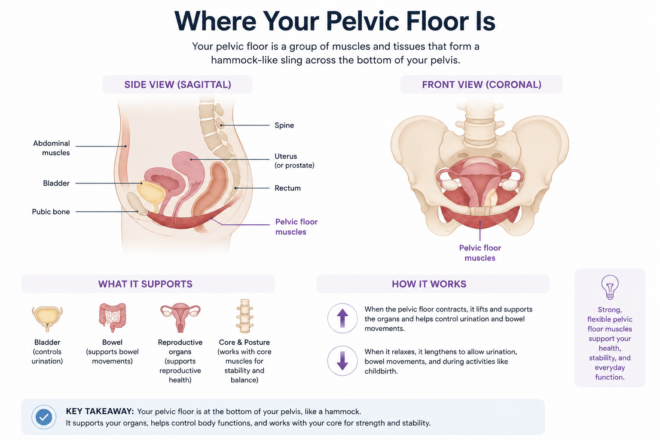
The pelvic floor is a group of muscles that sit at the base of your pelvis, stretching like a hammock between your pubic bone at the front and your tailbone at the back. They support your bladder, bowel and uterus, and they play a direct role in sexual function.
Most people have no idea these muscles exist until something goes wrong. But they’re active during sex whether you’re aware of them or not.
Things most people don’t know about the pelvic floor
The pelvic floor contains both slow and fast twitch muscle fibres. Slow twitch fibres handle the ongoing postural support work, keeping things in place throughout the day. Fast twitch fibres are what fire during orgasm. Training both matters, which is why holding a Kegel slowly and releasing quickly are different exercises with different benefits.
Arousal physically changes the pelvic floor. When you become sexually aroused, blood flow to the pelvic region increases and the muscles naturally begin to engage. A more responsive pelvic floor means your body can move into and out of arousal more efficiently.
The pelvic floor and the jaw are connected through the body’s fascial network. Chronic jaw tension and chronic pelvic floor tension often go together. This is one reason why breathwork and body-based practices that release tension systemically can have an effect on pelvic floor function that targeted exercises alone don’t.
Stress is one of the most common causes of pelvic floor tightness. The body’s response to stress includes bracing and holding, and the pelvic floor is one of the places people hold without realising it. This is why pelvic floor health isn’t purely a physical fitness question: it’s connected to your nervous system, your stress levels and how safe your body feels on a day to day basis.
Orgasms themselves are good for pelvic floor health. The rhythmic contractions that happen during orgasm are essentially an involuntary workout for the muscles. Regular orgasms contribute to circulation, muscle tone and tissue health in the pelvic region.
How pelvic floor exercises can help you
The benefits people actually notice fall into a few categories.
Stronger orgasms
The contractions that happen during orgasm are produced by the pelvic floor. Stronger, more responsive muscles mean stronger contractions. Many people find orgasms become more intense, last longer, or are easier to reach consistently once they’ve built a regular practice.
More sensation during sex
Better muscle tone increases blood flow to the pelvic region, which directly affects sensitivity. Things that felt muted can start to feel sharper. Arousal can come more easily and feel more present in the body.
More control
A well-trained pelvic floor gives you the ability to consciously engage and release during sex. That kind of body awareness changes the experience significantly, both for sensation and for confidence.
Less pain
For people who experience discomfort during penetration, pelvic floor work can help. Often pain comes from muscles that are too tight rather than too weak, and learning to release them properly makes a real difference.
A better relationship with your body
This one is harder to quantify but comes up consistently. Paying attention to this part of your body, understanding how it works and what it needs, tends to shift how connected people feel to their own pleasure overall.
How to do pelvic floor exercises
The most common mistake with pelvic floor exercises is doing them wrong. Squeezing too hard, holding your breath, tensing your glutes or stomach instead: all of these mean you’re not working the right muscles.
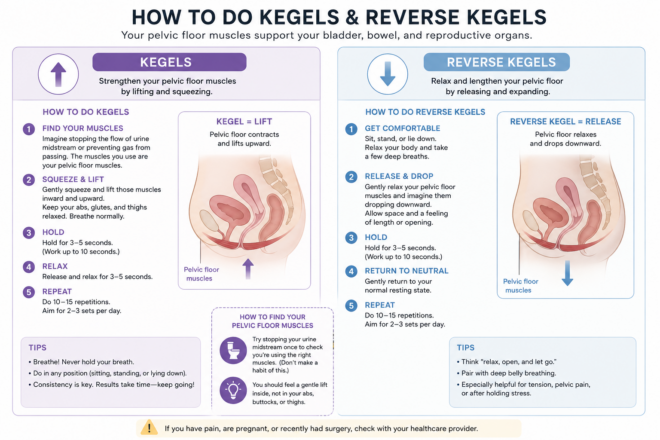
Here’s how to find them: next time you use the bathroom, try to stop the flow of urine mid-stream. The muscles you use to do that are your pelvic floor. Don’t make a habit of actually stopping mid-stream, but that’s the sensation you’re looking for.
Kegels
A Kegel is simply a contraction of those muscles. Squeeze them, hold for three to five seconds, then let go completely. The release matters as much as the squeeze. Aim for ten repetitions, two to three times a day, and build up the hold time gradually as the muscles get stronger. You can do them sitting, lying down or standing. Nobody around you will know.
Reverse Kegels
Where a Kegel squeezes, a reverse Kegel does the opposite: a slow, deliberate release and gentle downward push, like you’re gently bearing down. This is the movement most people skip, but it’s just as important. A pelvic floor that can only grip and not let go creates its own problems, especially during sex.
Diaphragmatic breathing
This just means breathing deeply into your belly rather than your chest. When you inhale slowly and fully, your pelvic floor naturally drops and lengthens. When you exhale, it gently lifts. Practising this for a few minutes a day builds awareness of the muscles and helps release tension you might not know you’re holding there.
Pelvic floor and pleasure
This is the part that rarely makes it into the standard advice.
Many people who start doing pelvic floor exercises consistently report that their orgasms become stronger, longer or easier to reach.
It goes beyond orgasm too. Better circulation to the pelvic region, which comes with regular exercise of these muscles, increases sensitivity and arousal. Some people notice they become aroused more easily, or that sensations during sex feel sharper and more present.
For penetrative sex, a stronger and more coordinated pelvic floor means more sensation for both people. It also means more control: the ability to relax fully when you want to, and to engage when you want to. That kind of body awareness changes sex in ways that are hard to overstate.
Explore women's health practitioners
Building a practice
Consistency matters more than intensity here. A short daily practice will do more than an occasional long session.
Start with five minutes a day. Ten Kegels, ten reverse Kegels, a few minutes of deep breathing. Do it at a time you’ll actually remember: first thing in the morning, before sleep, or attached to something you already do daily.
Most people notice changes within four to six weeks. Orgasm intensity and general sensation tend to be among the first things to shift.
Too tight is also a problem
A hypertonic pelvic floor, where the muscles are chronically contracted and unable to fully release, can cause pain during sex, difficulty with penetration, a feeling of tightness or burning, and in some cases vaginismus, where penetration becomes partially or completely impossible due to involuntary muscle spasm.
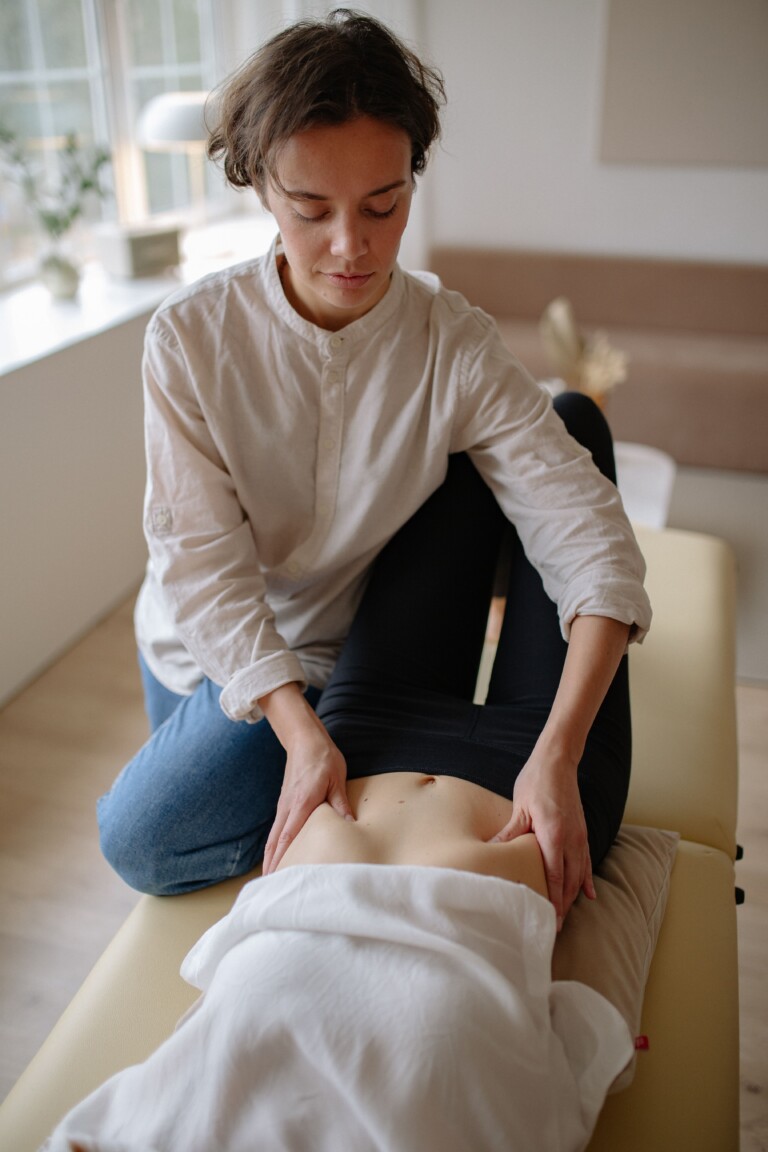
If sex is painful, if tampons are uncomfortable, or if penetration feels like hitting a wall, this could be why. It has nothing to do with not being aroused enough. It is a muscular issue and it is treatable. Standard Kegels will make this worse, not better. Reverse Kegels and diaphragmatic breathing are more useful starting points, and if symptoms are significant it’s worth seeing a pelvic floor physiotherapist who can assess what’s actually going on.
Explore with Sensuali
Understanding your pelvic floor is one thing. Having space to actually explore what that means for your pleasure is another.
Sensuali brings together practitioners who work with the body in ways that go beyond the clinical. A physiotherapist can help with the structural and medical side. But if what you’re looking for is support around pleasure, sensation and intimacy, that’s a different conversation and one Sensuali is built for.
Coaches on Sensuali can help you connect pelvic floor health to your broader intimacy and wellbeing.
That might mean working through pain or tension, building a healthier relationship with your body, or simply understanding what pleasure looks and feels like for you. It’s a more whole-person approach than exercises alone can offer.
Women's wellness experiences
Somatic Healing & Erotic Empowerment Sessions
SOMA ⛲️ Virtual Intuitive Intimacy Guidance
Sex Therapy w/ Mattress Actor
Build your Intimacy Ecosystem - Group coaching program
Online Sexology Sessions
Couples Tantric Immersion
Meet & Greet
Couples Somatic Sex Coaching
Tantric Embodiment Journey (Online)
How to Approach Women: Confidence, Connection and Consent
Sexological Bodywork
New City, US
Come Home Coaching Session
Related reading: Low libido in women: causes, myths and what you can do
Sources & further reading.
- American Journal of Obstetrics & Gynecology, 2024. Pelvic Floor Muscle Training as Treatment for Female Sexual Dysfunction: A Systematic Review and Meta-Analysis. Meta-analysis showing pelvic floor training improved arousal, orgasm intensity, satisfaction, and pain scores. Directly supports the pleasure and sensation claims.
- PMC / NCBI, 2025. Female Sexual Function and Pelvic Floor Muscle Training: A Narrative Review. Covers the mechanisms behind pelvic floor training benefits — increased blood flow, muscle strength, body awareness — across general and postpartum populations
- International Society for Sexual Medicine. How Do Pelvic Floor Disorders Affect Sexual Health?. Professional body source explaining how overly tight pelvic floor muscles cause pain during penetration and contribute to vaginismus. Good authoritative cite for the "too tight" section.
- Pelvic Pain Rehabilitation Center. The Jaw and Foot: Connections to the Pelvic Floor. Explains the deep frontal fascial line connecting jaw and pelvic floor, and how stress-related jaw clenching can drive pelvic floor overactivity.