
Reclaiming pleasure as a radical act: meet Alicia of House of Circe
Meet Alicia, founder of House of Circe, a queer educator exploring embodied consent, sensuality, pleasure and intimacy through playful workshops in London and France.
TL;DRIn 60 words
This interview features Alicia, founder of House of Circe, a queer facilitator and educator offering workshops in London and France around embodied consent, sensuality, intimacy and introductory BDSM. Her queer-led approach combines playful exploration, communication and body awareness to help people explore pleasure, boundaries and connection.
London / Paris / South of France Practising since 2016 Sessions from £45
View Alicia’s profile ›What happens when we stop following the rules we’ve inherited about sex, relationships and desire, and start exploring what actually feels right for us?
Meet Alicia, the founder of House of Circe, a queer-led project exploring intimacy, pleasure and connection through embodied consent, sensuality and BDSM workshops. With a background in neo-Tantra and over eight years of experience facilitating workshops, Alicia’s approach brings together playfulness, political curiosity and a belief that sensuality belongs to everyone.
We spoke to her about making consent sexy, questioning traditional ideas of intimacy and why reclaiming pleasure can be a radical act.
You’re reading Sensuali
A space for exploring intimacy, sensuality and kink. Message trusted practitioners, book real experiences, discover sensual events and get answers in our forums.
Iso
How would you describe yourself in three words?
Alicia
Undefinable. Curious. Playful.
Iso
What services do you offer on Sensuali?
Alicia
I facilitate sex-positive, queer-led workshops exploring consent, sensuality, intimacy, communication, pleasure and BDSM.
My work combines embodied practices, connection games, nervous system awareness and playful exploration to help people develop a more authentic relationship with themselves and others.
Iso
Tell us more about yourself…
Alicia
I’m Alicia (she/her), a queer facilitator, educator and curious human who loves questioning the rules we’ve inherited about bodies, sex, relationships and desire.
I’m interested in what happens when we stop performing who we’re supposed to be and start getting curious about what we actually feel, want and enjoy.
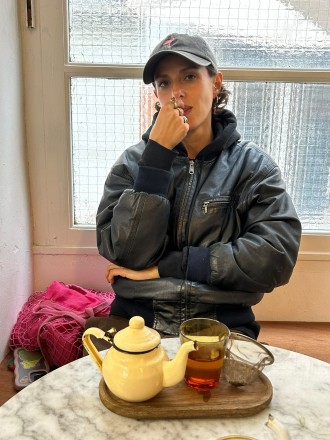
My work lives somewhere between politics and pleasure, deep conversations and ridiculous games, vulnerability and a healthy dose of silliness.
I believe sensuality belongs to everyone, regardless of their gender, body, sexuality, experience or relationship status. I’m passionate about creating spaces where we can experiment, make mistakes, laugh at ourselves, practise boundaries and discover new possibilities for connection.
Outside of facilitating, I’m drawn to community, nature, art, philosophy and anything that makes life feel a little more alive. I’m also interested in how we build ways of relating that are less shaped by patriarchy, performance and the pressure to get everything right.
For me, pleasure, rest, embodied presence and genuine connection aren’t frivolous extras. In a world that constantly asks us to produce, perform and disconnect from ourselves, they’re pretty radical things to reclaim.
Iso
What turns you on?
Alicia
Curiosity, intensity, certain smells, textures, people who know how to laugh at themselves, good communication, playfulness, intellectual chemistry and stimulation, unexpected tenderness, a room full of people letting their guard down, the moment someone realises they don’t have to perform a version of themselves to be desirable, people who are interested in exploring rather than proving something, and the possibility of doing things differently.
Iso
What was your journey into this world?
Alicia
My journey into this work grew out of a curiosity about sexuality, embodiment, intimacy and the ways we’re taught to relate to ourselves and other people.
I became increasingly interested in the gap between what we’re told we should want and what we actually experience in our bodies. We’re given so many scripts about sex, gender, desire and relationships, yet very few spaces to question them, experiment with alternatives or learn how to communicate about what we want.
I was drawn to embodied and sensual practices as a way of exploring these questions beyond theory. But I also became interested in the politics of these spaces: whose bodies and desires are centred, whose experiences are excluded, and how even spaces that claim to be liberating can reproduce the same old gender roles and power dynamics.
Some of my work grew out of encounters with neo-Tantra and its approaches to embodiment, connection and sensuality. Over time, I wanted to move away from rigid masculine/feminine polarities and frameworks that didn’t reflect the complexity of queer experiences or the diversity of how people experience their bodies and desires.
That evolution led me towards a more explicitly queer, consent-centred and politically conscious approach. I wanted to create spaces where people could explore intimacy without being told what it should look like, what kind of energy they should embody, or what experiences they should be working towards.
Consent became a central part of this journey. Not just consent as a set of rules or a verbal yes, but consent as an ongoing relationship with ourselves.
This means learning to recognise our sensations, notice our boundaries, acknowledge our desires and communicate them. It’s difficult to make choices that genuinely reflect what we want if we’ve learned to disconnect from ourselves to keep other people comfortable.
For over eight years, I’ve been facilitating workshops that bring these questions into practice. Through Embodied Consent, Radical Intimacy, Qu’intimacy Lounge and introductory BDSM workshops, I create opportunities for people to explore these themes with others in a structured, supportive and playful environment.
What matters to me is that these aren’t spaces where people have to be confident, experienced, sexually adventurous or particularly good at communicating to belong. They’re spaces to practise. To get curious. To discover that not knowing is allowed, that boundaries can change, that desire isn’t always straightforward, and that connection doesn’t have to follow a predetermined script.
I’m still learning, studying sexology and sex therapy, and questioning my own assumptions along the way. I don’t see this work as having all the answers. I see it as creating the conditions for better questions, more honest encounters and more freedom in how we relate to ourselves and each other.
Iso
What do the first 60 minutes of your day look like?
Alicia
Honestly, I’m still working on making my mornings less chaotic! My brain tends to wake up with approximately seventeen urgent thoughts and several ideas for things I absolutely must do immediately.
I’m trying to create more space between waking up and launching straight into productivity: a little movement, a warm drink, some quiet and a chance to actually arrive in my body before my brain takes over. It’s an ongoing practice rather than a perfectly optimised morning routine.
Featured in this article
View profile
Book a session with House of Circe
BDSM
Sex therapist
Educator
Shibari
I am Alicia (she/her), a queer, trauma-informed educator and facilitator with over 8 years of experience…
Iso
Why do you do what you do?
Alicia
Because I think we’re all living with the consequences of being taught to disconnect from ourselves.
Patriarchy, gender norms, heteronormativity and the pressure to be desirable, agreeable and productive shape how we experience our bodies, relationships and sexuality.
Many of us learn to prioritise other people’s comfort over our own, to say yes when we mean no, or to pursue what we’re supposed to want rather than what genuinely feels good.
I want to create spaces where we can start unlearning some of that.
Consent isn’t only about preventing harm. It’s also about making more room for pleasure, agency, curiosity and choice. When we learn to recognise our own yes, no and maybe, we can begin to relate to others with more honesty and freedom.
For me, Eros and sensuality are nourishing, life-supporting forces. These energies are not limited to sex; they are sources of deep feeling, vitality, joy and connection with ourselves and the world around us.
They allow us to experience life more fully, to recognise what nourishes us and to connect with what feels meaningful and alive. I believe everyone should have access to this source of nourishment, in whatever way feels authentic to them.
It doesn’t have to involve sex or touch. It might be taking the time to really smell a rose, feeling the warmth of the sun on your skin, getting lost in music or being fully present with another person. These moments awaken our senses and reconnect us with the pleasure of being alive.
For me, reclaiming sensuality is also a political act. In a world that encourages us to disconnect from our bodies, override our needs and constantly produce, making space for pleasure, presence and joy is a way of coming back to ourselves.

I’m also interested in the collective dimension of this work. We don’t learn intimacy in isolation; we learn it in relationships with other people.
Practising new ways of communicating, touching, playing and setting boundaries together can open up possibilities that are difficult to imagine on our own.
Ultimately, I do this because I want us to have more freedom in how we live, love, desire, connect and inhabit our bodies. I believe in building community as an act of resistance.
Iso
What is an unexpected pleasure you’ve discovered in your work?
Alicia
Witnessing community grow right in front of my eyes. People who meet at a workshop go on to meet up, attend events together, share experiences and build friendships. Seeing connections extend beyond the space we’ve created together is incredibly beautiful. It reminds me that these workshops aren’t just individual experiences; they can be the starting point for something much bigger.
I also love witnessing the transformation that happens within a workshop. People often arrive carrying their protections, apprehensions and uncertainties. But as time passes, I get to watch them soften, become more present, take little risks, lean into vulnerability and open themselves up to connection. There’s something really moving about seeing people’s moods shift, watching joy emerge and feeling the whole room become a little more alive.
And beyond what happens in the room, it’s beautiful to hear how this work stays with people and influences how they relate to themselves and others.
Getting to witness these small and sometimes profound shifts, and seeing how they ripple out into people’s lives and relationships, is one of the most rewarding parts of what I do.
Discover sensual experiences in London
Book on Sensuali
All experiences-
From £35
-
From £195
-
From £85
-
From £70
-
From £400
In person, London, GB
High end sensual photoshoot with acclaimed professional photographer.
By Rob Anderman Boudoir -
From £200
-
From £975
-
From £25
In person, London, GB
21 Feb 2027 | 13:00
Beginners' Striptease Skills - in-person workshop. Camden, London
By RuthRamsay -
From £360
-
From £350
-
From £200
-
From £200
Iso
What do you wish more people knew about the practice you specialise in?
Alicia
That consent isn’t a mood killer, it isn’t just about saying no and it can be really sexy.
I don’t think we need more rules about how to have the perfect sex life or the perfect relationship. I think we need more spaces where we can experiment, question what we’ve inherited and discover what actually works for us.
Intimacy doesn’t have to mean romantic partnership, sex or physical touch. It can be a conversation, a shared laugh, a moment of honesty, dancing together or being able to say no without fear of losing connection.
Iso
What’s your superpower?
Alicia
Making the serious playful without losing the depth.
I’m good at creating spaces where people can explore vulnerable subjects without feeling like they’re in a therapy session or a university lecture.
I love bringing together political analysis, embodied practices, humour and a little bit of chaos.
I also think I’m good at noticing the invisible rules in a room: the assumptions people are making, the pressure to perform, the things that aren’t being said. I like gently bringing those into the open and inviting people to experiment with something different.
And I’m very happy to be the person who reminds everyone that it’s okay to be awkward. We’re human beings trying to figure out intimacy together. Of course it’s awkward sometimes, and that’s completely OK.
Iso
We love vices. What’s yours?
Alicia
More, more, more!!! I always want more. Sometimes I fly too close to the sun and I get burnt. That and overthinking.
Iso
Who are your sensual inspirations?
Alicia
I’m inspired less by a particular aesthetic or person and more by people who approach pleasure and sensuality in an embodied way. People who allow themselves to interact and play with the world around them, who approach the world with curiosity, integrity, play and a willingness to question the status quo.
I’m drawn to queer artists, writers, thinkers and practitioners who challenge conventional ideas about desire, gender, intimacy and the body. People who make room for contradiction, ambiguity, play and ways of living that don’t fit neatly into the boxes we’ve inherited.
Connect with more London intimacy practitioners
Our picks
All LondonInstagram: @house_ofcirce
Related reading
Meet Vale & Uria: playful erotic workshops in Berlin

The Author
Isobel Clark
Isobel is a writer and creative based in Paris. She has been working with Sensuali since 2022 and is deeply passionate about eroticism, kink, the feminine experience of pleasure and its place in art and culture. Originally from a Northern UK seaside town, she is naturally…
More from Isobel Clark
With
Alicia
Alicia (she/her) is a queer, trauma-informed educator and facilitator with over eight years of experience creating and holding workshops around consent, sexuality, sensuality and connection. She is the founder of House of Circe, a queer-led project devoted to embodied exploration, pleasure, intimacy and community. Her work…
More from Alicia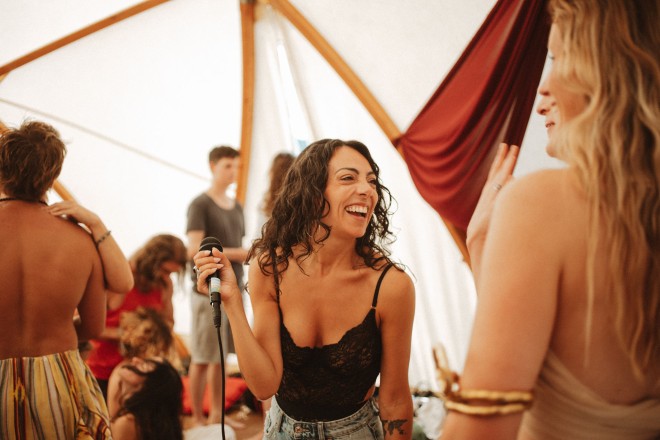
Previous interview
Meet Jess Ashby, the woman behind East Sussex’s Temple Nights
More from the Interview desk


Browse the magazine
Find your way aroundDiscover your path to sensual wellbeing.
Explore coaching, intimacy, tantra, touch workshops and more with trusted practitioners, online or in your city.
Join free to message practitioners, book experiences, events or retreats. 30 seconds to join. Confidential
Grow your practice
with the right clients.
Reach people looking for intimacy coaching, tantra, erotic art, bodywork and more.
Manage enquiries, bookings and grow your practice.