What you'll know after reading this
- Breath is one of the foundations of Tantra. Conscious breathing helps us slow down, become more present and reconnect with what is happening in our body.
- Our breath can influence our nervous system. Slow and conscious breathing has been studied for its potential effects on stress regulation, heart-rate variability and emotional regulation.
- Pleasure doesn't necessarily need more stimulation—it can need more attention. Breath can become an anchor that brings our attention back to sensation instead of rushing toward an outcome.
- There is no “perfect” way to breathe. Tantra breathwork isn't another performance to master. The first practice is simply noticing what your breath is already doing.
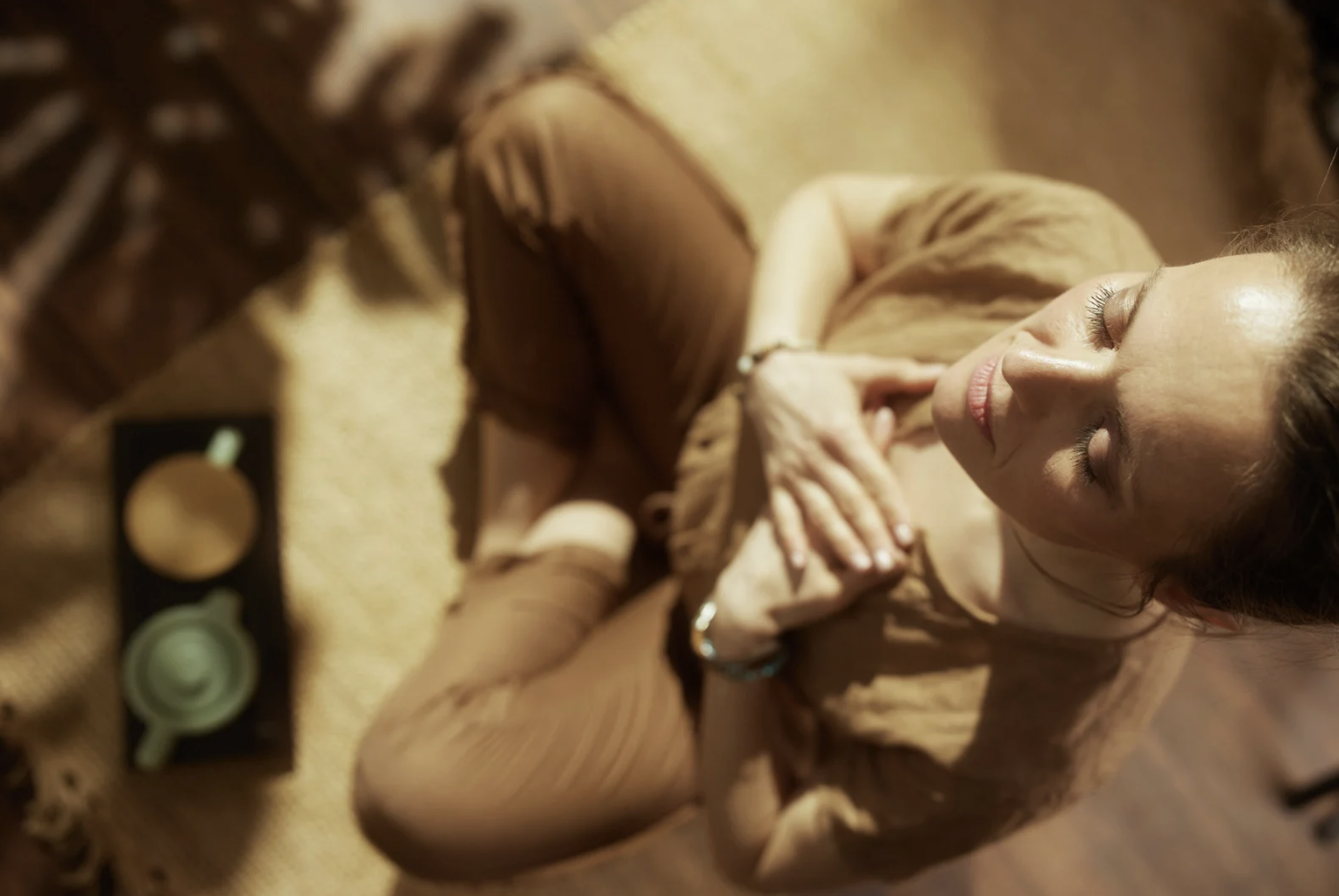
Breath is one of the simplest yet most powerful foundations of Tantra. Conscious breathing can help regulate the nervous system, slow us down and bring awareness back into the body. During pleasure, breath becomes an anchor, helping us relax, stay present and notice sensations more deeply. Tantra breathwork isn’t about perfect technique, it’s about curiosity, attention and conscious embodiment.
If there’s one thing we should have learnt at school, it’s definitely breathing… don’t you think?
It sounds almost ridiculous. We breathe approximately 20,000 times a day without thinking about it. We obviously know how to breathe.
And yet, learning to breathe with awareness has probably been one of the simplest and most transformative things I have discovered through Tantra.
Before exploring meditation, yoga and tantric practices, I never paid much attention to my breath. It happened somewhere in the background while I concentrated on more important things.
Because breath is intimately connected to how we experience our bodies: how tense or relaxed we feel, where we place our attention and, interestingly, how we experience pleasure. This is why Tantra and breathwork are so deeply intertwined.
What is breathwork?
At its simplest, breathwork means intentionally changing or paying attention to the way we breathe.
There is a broad kaleidoscope of breathwork technique. Practices can involve slowing the breath, changing its depth, breathing predominantly through the nose, emphasizing the diaphragm, extending the exhale, alternating nostrils or following particular rhythms.
Some techniques come from ancient traditions such as yogic pranayama and Buddhist practices; others have developed through contemporary therapeutic and wellness movements.
And despite some rather extravagant claims circulating in the wellness world, there is genuine scientific interest in what happens when we consciously change our breathing.
Breathwork isn’t the solution for everything but it is a remarkably accessible way of communicating with our own body.
Breath, the nervous system and slowing down
One reason breathing is so interesting is that it sits somewhere between the automatic and the intentional.
Your body will happily continue breathing while you sleep, you don’t need to remember to do it.
But unlike many automatic bodily processes, you can also consciously intervene.
You can slow your breathing down, you can deepen it., you can notice it without changing it.
And these changes can influence physiological systems involved in stress regulation. Research into slow, diaphragmatic and nasal breathing has explored effects on autonomic regulation, heart-rate variability and emotional regulation, although the strength of evidence varies between techniques.
I find this bridge between the conscious and unconscious fascinating and in Tantra, it becomes particularly interesting.
What happens to our breath during pleasure?
Some people naturally hold their breath when experiencing intense sensations.
I used to do this too. And sometimes I still catch myself doing it.
There would be pleasure, intensity and suddenly I would realize I wasn’t really breathing anymore. When I learned to consciously keep breathing while receiving pleasure, it completely changed the way I experienced it.
Instead of contracting around the sensation, I felt that I could stay with it, relax more, notice more.
And instead of rushing toward wherever the experience seemed to be going, I could become curious about what was happening right now.
This is something Tantra has taught me again and again: pleasure doesn’t necessarily need more stimulation, it needs more attention.
Tantra breathwork brings us back into the body
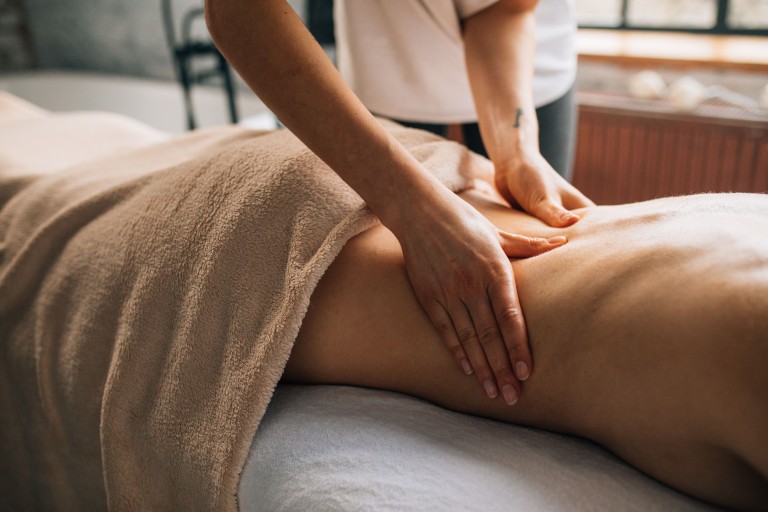
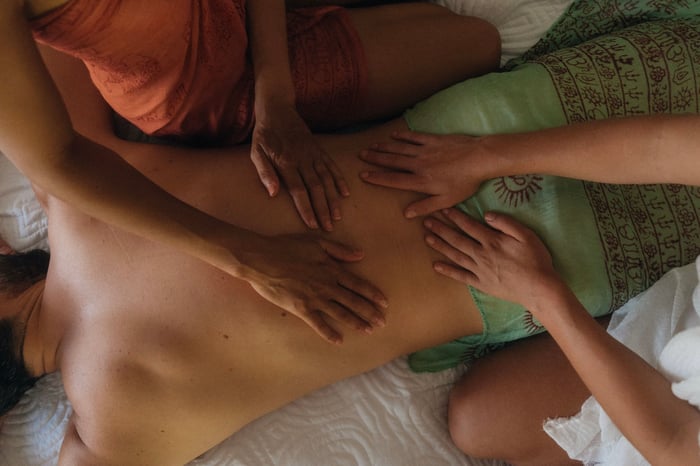
During a tantric massage or session, there can be a lot happening: someone is touching you, your body is responding, thoughts appear, expectations appear and maybe self-consciousness appears. Excitement, nervousness or memories can arise too.
It is surprisingly easy to leave the body precisely when we’re trying to feel it.
For me, returning my attention to my breath gives me somewhere to come home to.
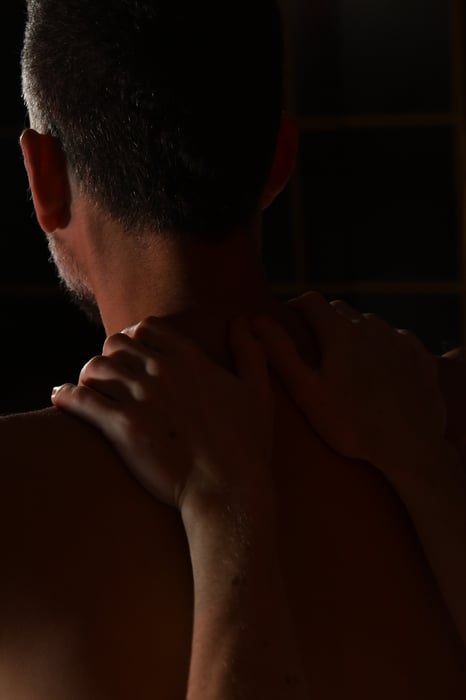
Focusing on breathing while receiving a tantric massage can help slow the experience down and bring attention toward sensation. It doesn’t guarantee relaxation—nor should relaxation become another performance goal but it can create conditions in which we notice tension and allow ourselves to soften.
This is one reason Tantra breathwork isn’t necessarily about learning complicated breathing exercises. Sometimes the practice is simply remembering not to abandon your breath when sensation becomes intense.
Nose, chest, belly: exploring different ways of breathing
One of my favourite discoveries has been simply experimenting with how I breathe.
Place a hand on your chest and another on your belly and observe what happens. Where does the movement naturally occur?
What changes when you allow the diaphragm to move more freely and the belly to expand? What happens when the breath becomes slower? What does breathing through your nose feel like compared with breathing through your mouth?
These aren’t necessarily better or worse ways of breathing in every situation. They simply create different bodily experiences and can become interesting objects of awareness.
Research has increasingly examined nasal and diaphragmatic breathing in relation to respiratory function and autonomic regulation, although this is still an evolving field.
Tantra gives us permission to explore this experientially too: try something, notice, change it, notice again. Your body becomes the laboratory.
Breath doesn’t need to become another performance
There is one thing I think is particularly important in both Tantra and breathwork: you cannot fail at breathing!
I sometimes see wellness practices turn something beautifully simple into another skill we need to master.
Am I breathing deeply enough? Is my belly moving correctly? Am I sufficiently relaxed? Am I doing Tantra properly?
And suddenly our attempt to become present has given us another reason to judge ourselves.
For me, breathwork becomes most interesting when it moves in the opposite direction.
It isn’t about forcing myself into a particular state. It is about becoming curious about the state I’m already in: sometimes my breath is deep, sometimes it is shallow, sometimes pleasure makes me hold it. The first practice is simply noticing.
Breath as a foundation of Tantra
We often imagine Tantra through its more spectacular elements: intimacy, ritual, sensuality, energy, ecstatic experiences.
But underneath all of that is something much simpler: breathing.
Breath gives us a way to slow down, to remain connected to ourselves while experiencing another person. To observe tension rather than immediately fighting it. And to experience pleasure with a little less urgency and a little more curiosity.
That is why, for me, learning about Tantra and breathwork isn’t really about becoming an expert in breathing techniques.
It’s about learning to inhabit my body more consciously. Perhaps that’s the funny thing, we spend years learning mathematics, history and grammar. Yet one of the most useful things I’ve had to learn as an adult is something I’ve been doing since the second I was born: how to breathe.
Tantra, Breathwork
All experiences
 Rick Mass
Guided Tantra & Breathwork Session

 Alexandra Schulz
Couples Sensual Intimicy Breathwork (Online)
 Sookah
Erotic Breathwork Ceremony (Online)

 Veritie
Pathway to Ecstasy: Erotic Breathwork + Sensual Massage
Nevada City, US
 Scarlet
Tantra & Intimacy Coaching
Berlin, DE
 Sophie Devi
Couple’s Tantra Immersion
Berlin, DE
Tantra, Breathwork
All experiencesGuided Tantra & Breathwork Session
Couples Sensual Intimicy Breathwork (Online)
Erotic Breathwork Ceremony (Online)
Pathway to Ecstasy: Erotic Breathwork + Sensual Massage
Nevada City, US
Tantra & Intimacy Coaching
Berlin, DE
Couple’s Tantra Immersion
Berlin, DE